
Easter Week 2025 in Ecuador: A Journey of Faith, Flavor, and Flourishing Spirit
Andrea
-
May 5, 2025
It began, as it always does, with the silence of a city holding its breath.
In the heart of Quito, the sun was just beginning to rise above the Andes, painting the colonial rooftops in warm gold. The narrow cobblestone streets, which just days before had echoed with honking horns and hurried steps, were now filled with the scent of incense, the distant beat of a drum, and the solemn murmur of prayers.
It was Palm Sunday, and Easter Week 2025 in Ecuador had begun.
But this year felt different. This was not just a week of holy observance. It was something more — a revival. A celebration. A homecoming for culture, tourism, and community. After a few difficult years of recovery and rebuilding, Easter Week 2025 rose like a phoenix, not just surpassing previous years in numbers but in spirit.

The Streets Come Alive with Tradition
In cities across the country — from Quito to Cuenca, Guayaquil to Loja — age-old traditions came back to life with newfound vibrancy.
In Quito’s historic center, thousands of people lined the sidewalks to witness the Procesión de Jesús del Gran Poder, one of Latin America’s most iconic Holy Week events. The silence was pierced only by the somber rhythm of drums and the shuffle of barefoot penitents, many of them dressed in the traditional purple robes and hoods of the cucuruchos. Some walked in solemn devotion, others carried wooden crosses — visible, physical burdens that mirrored the spiritual one commemorated in the Easter story.
Tourists watched in awe. Locals wept. Children clutched their parents’ hands as they asked questions about the figures, the music, the meaning behind it all. It was more than a religious ritual — it was a living history lesson, unfolding on the streets in real time.
This year, the procession drew a record-breaking crowd of nearly 100,000, with hotel occupancy in the city reaching over 80%. According to Quito Turismo, visitors poured in not only from around the country but from abroad, many eager to experience the blend of devotion and spectacle that Easter in Ecuador promises. Local vendors flourished, selling handmade rosaries, traditional sweets like higos con queso, and the famous fanesca — Ecuador’s sacred Easter soup.

Fanesca: A Nation in a Bowl
If there’s one thing that binds Ecuadorians across regions, beliefs, and generations during Holy Week, it’s fanesca.
Made from twelve different grains to represent the twelve apostles, combined with salted cod, milk, and spices, fanesca is much more than a meal. It’s a symbol of family, tradition, and abundance. Grandmothers passed down secret recipes. Markets filled with long queues of people hunting for the best chochos, zapallo, and dried fish. Restaurants launched special Holy Week menus, and even international visitors developed a taste for this hearty, comforting dish.
In 2025, a national culinary contest hosted in Cuenca celebrated fanesca from different provinces, showcasing regional variations with pride — some with peanuts, others with corn dumplings, and even a few modern twists for the vegan crowd. It was, quite literally, a melting pot of Ecuadorian identity.
Cuenca’s Spiritual Mosaic
In Cuenca, Easter Week was equally stirring. The city known for its colonial charm and artistic soul offered a deeply personal experience of the sacred week. Its stone churches brimmed with candlelight and choral hymns. Art galleries hosted exhibits on biblical themes, while local musicians filled the plazas with soft acoustic sounds that blended prayer with poetry.
The city welcomed over 280,000 visitors this year, bringing in an estimated $51 million in tourism revenue. Hotels, small inns, and Airbnbs were fully booked. Cultural centers ran 230 events over the course of the week — from processions and sacred art shows to children’s theater and Easter markets.
For a city that has long been the heart of Ecuadorian cultural life, Semana Santa 2025 felt like a renaissance. Cuenca reminded the country — and the world — that sacred tradition and contemporary creativity can coexist beautifully.

Faith Meets Adventure: The Andes and Beyond
But Easter in Ecuador doesn’t only take place in stone cathedrals and urban plazas. It happens in the valleys, on the coasts, and in the highlands too.
In Baños de Agua Santa, where the Andes meet the Amazon, faith and adventure blended in a way that only Ecuador can offer. Tourists came for the religious processions — where statues of saints were paraded through the misty town center — but stayed for the swings over the edge of the world, the hot springs, and the roaring waterfalls.
With 100% hotel occupancy during Holy Week, Baños experienced a record-setting tourism boom. Local guides led hikes to the Tungurahua volcano, while street vendors sold sugarcane juice and melcochas to smiling crowds. After sunset, live music spilled from restaurants, and fireworks lit up the mountain sky.
Faith, it seemed, was not only preserved — it was celebrated with joy and vitality.
The Coastal Vibe: Sand, Sun, and Soul
Meanwhile, on Ecuador’s Pacific coast, Easter Week took on a more relaxed but no less meaningful rhythm.
In Montañita and Salinas, where surfing and seafood are part of the local identity, thousands of visitors arrived to enjoy the long weekend. While the beach bars played salsa and reggaeton, many still found time to attend sunrise services or participate in candlelit processions on the sand.
This mix of sacred and secular, of celebration and reflection, is uniquely Ecuadorian. Here, the holy and the human go hand in hand. You might see a cross made of driftwood at a beach altar, or a group of teenagers baptizing each other in the ocean waves. Faith finds its way, even among sunbathers and surfboards.
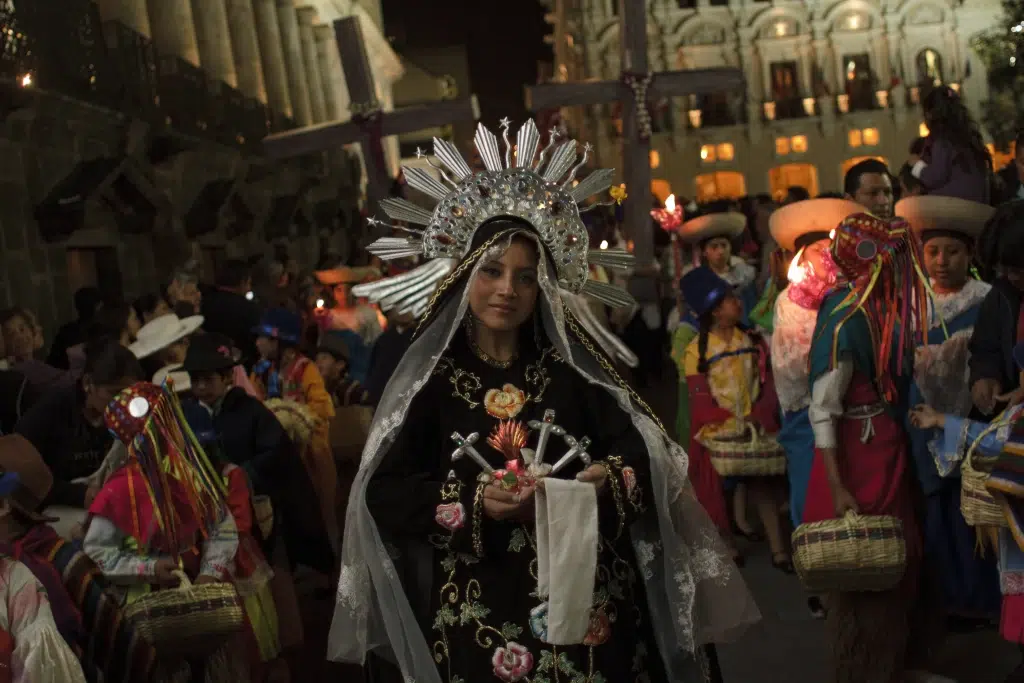
A Week That Redefined a Nation’s Spirit
What made Easter Week 2025 truly special wasn’t just the numbers — though they were impressive. It wasn’t just the increase in sales, visitors, or hotel bookings. It was the feeling in the air.
After years of uncertainty — from political unrest to economic hardship and global challenges — this Holy Week reminded Ecuadorians of who they are: a people of resilience, of deep-rooted faith, of joy and hospitality. The church bells didn’t just ring in celebration of Easter. They rang as a call to unity, to cultural pride, to collective renewal.
In every province, in every dialect, on every altar and every corner where fanesca was served or a candle was lit — Easter Week became a tapestry of stories. Grandparents passed on traditions. Children made new memories. And Ecuador, once again, showed the world that even a small country can make a mighty sound when it sings from the soul.
Looking Ahead
If Easter Week 2025 is any indication, Ecuador’s cultural tourism sector is not only back — it’s blooming. The success of this sacred season has set the stage for future festivals, events, and national pride campaigns. It reminded the world that Ecuador is more than just a destination — it’s a feeling, a rhythm, a way of life.
As the final echoes of the last procession faded into the dusk of Easter Sunday, there was no doubt: Ecuador had not just celebrated Holy Week.
It had lived it — loudly, lovingly, and with unwavering grace.
Latest Newsletters
Colombia Invests in Regional Airstrips to Boost Emerging Tourism Destinations
Colombia upgrades regional airstrips to boost tourism, enhancing accessibility to emerging destinations while promoting sustainable travel.
Ecuador prepares to enjoy carnival
Ecuadorians gear up for Carnival 2025, celebrating with parades, dances, water games, and delicious cuisine from March 1 to 4.